
R1BBIT gives product teams a shortcut from idea to shipping hardware. Prototype a connected device in an afternoon, then take the same board to production — no dedicated firmware team, no toolchain, no custom backend. Write your device logic as compact scripts, control it from a mobile app, and stream telemetry to the cloud out of the box.
A worked example: refrigerated equipment
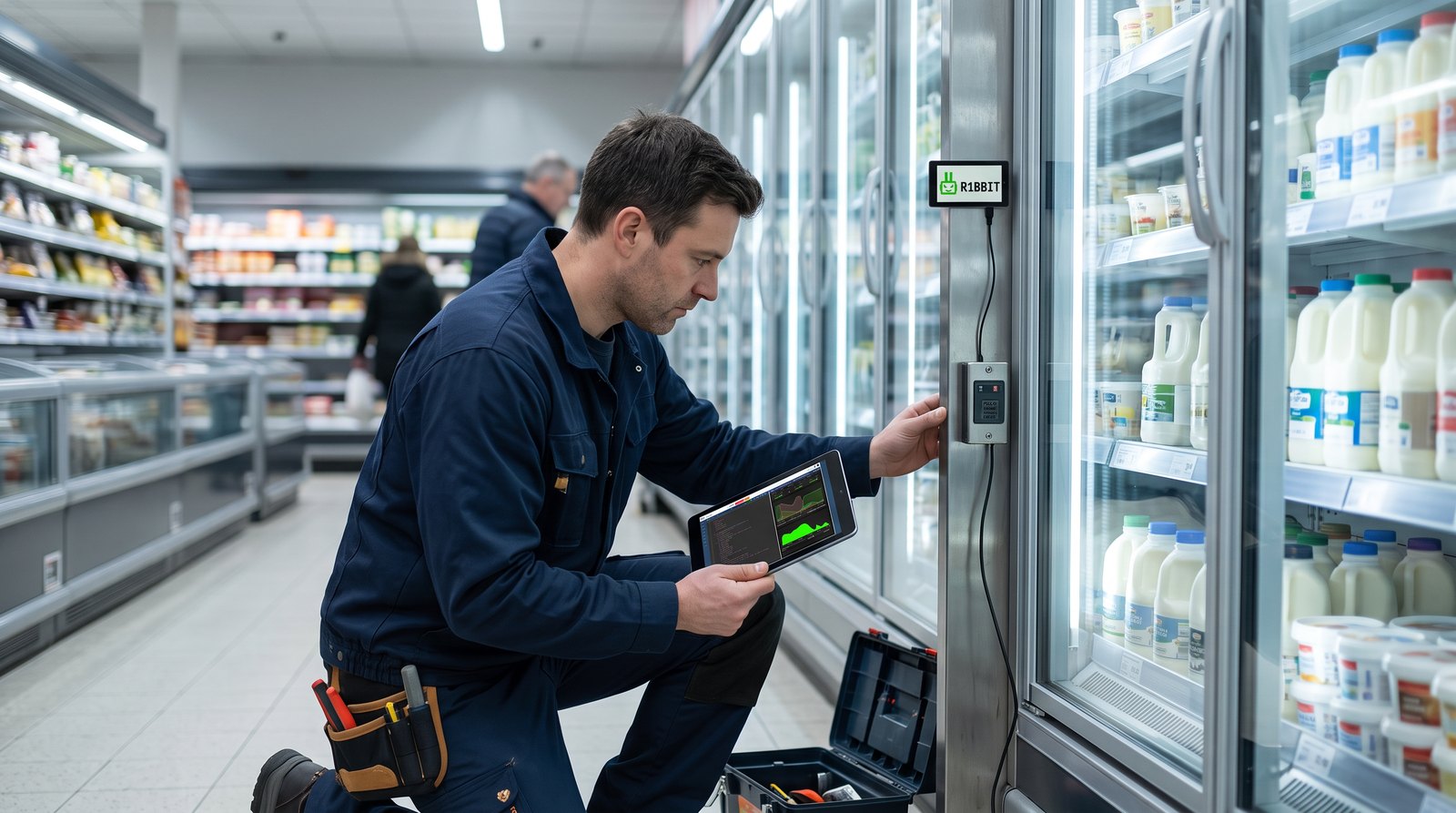
A supermarket has forty cabinets and freezers. Somebody walks round twice a day with a clipboard, and a compressor that fails at nine in the evening is discovered at seven the next morning, along with the stock inside it. Here is the same job done with R1BBIT.
One board per cabinet
A temperature probe on the board, a script of a dozen lines, and it starts reporting. The board is cheap enough to fit to every cabinet rather than to a representative few, and the same script goes onto all of them at once.
Readings become history
One command publishes each reading to the cloud, where it is stored and drawn as a chart with no backend of yours involved. Yesterday, last week and last quarter are all there when an inspector or an insurer asks.
The failure finds you
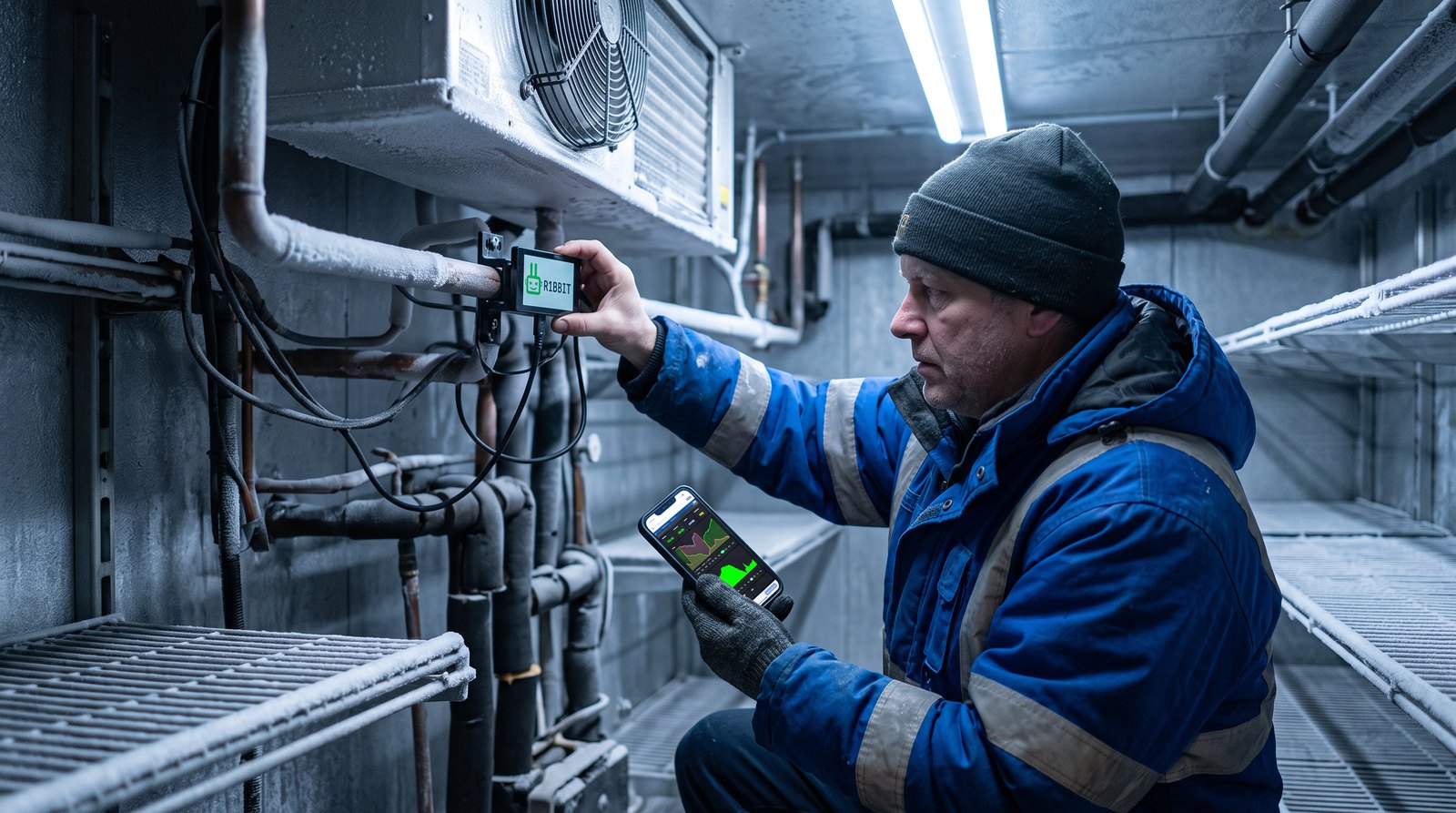
A condition in the script sends a push the moment a cabinet drifts out of range, and the engineer arrives with the history already on their phone. The change of threshold ships to all forty boards over the air.
Why teams choose R1BBIT
- Prototype to product on one platform — the same scripts and cloud features run from your first proof-of-concept to a deployed fleet.
- Over-the-air everything — push encrypted firmware and script updates to devices in the field, no cable required.
- Cloud & dashboards included — telemetry, charts, and remote control without writing a backend.
- Fleet-ready — activate, monitor, and manage many devices from one place, each identifiable by its MAC and connection history.
- Hardware-agnostic — build on any supported ESP32 board and switch chips without rewriting your project.
What you do not have to build
The parts of a connected product that usually take a team a quarter are already there, and they are the same ones whether you ship ten devices or ten thousand.
- A backend — telemetry is stored and served for you; there is no service of yours to write, deploy or keep alive.
- Dashboards — charts, gauges and controls are assembled from the device’s own variables.
- A mobile app — the published apps show your devices; you build the screen, not the app.
- An update channel — encrypted over-the-air delivery of both firmware and scripts is part of the platform.
- Device management — activation, identity and fleet status come with it.
Built for real products
- Industrial and environmental monitoring
- Smart-building sensors and controllers
- Connected appliances and equipment
- Field data loggers and remote telemetry
- Fast client demos and proofs-of-concept